Why Precise Medication Timing Matters for Your Child's Health
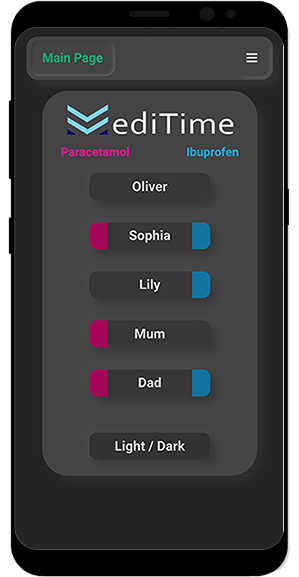
When your child is unwell and needs medication, timing isn't just a matter of convenience—it's a critical aspect of their healthcare. Whether administering paracetamol for fever or ibuprofen for pain and inflammation, maintaining accurate medication schedules is essential for both effectiveness and safety. This article explores why precise medication timing is crucial and how digital tools like the MediTime app can help parents navigate this responsibility.
Key Points:
- Medicine packaging sets a minimum interval between doses and a daily maximum
- Consistent intervals are what the medicine packaging is based on
- A written or digital record is easier to rely on than memory
- Using a dedicated medical timer app helps multiple caregivers coordinate care
The Science Behind Medication Timing
Medications like paracetamol and ibuprofen work by maintaining a certain concentration in the bloodstream. When a dose is administered, the medication's concentration rises, peaks, and then gradually decreases as the body metabolizes it. The recommended dosing intervals are carefully calculated to ensure that:
- The concentration remains high enough to be effective
- The concentration never reaches potentially harmful levels
- The body has sufficient time to process and eliminate the previous dose

Understanding Medication Concentration
The graph illustrates how medication concentration changes over time. When doses are given too close together (overlapping peaks), the total concentration can reach dangerous levels. When doses are given too far apart (gaps between coverage), the medication may not provide consistent relief.
Common Medication Timing Challenges for Parents
Timing Challenges
- Middle-of-night doses: Remembering when the last dose was given during sleep disruption
- Multiple caregivers: Coordinating between parents, grandparents, and childcare providers
- Busy schedules: Tracking doses amid daily activities and responsibilities
- Multiple children: Managing different medication schedules for siblings
- Different medications: Coordinating paracetamol and ibuprofen timing when both are prescribed
Potential Risks
- Underdosing: Medication wears off before next dose, leading to symptom return
- Overdosing: Administering doses too close together, risking toxicity
- Missed doses: Forgetting doses altogether, compromising treatment
- Confusion: Mixing up which child received which medication
- Inconsistent relief: Creating a roller-coaster effect of symptom management
The Consequences of Improper Medication Timing
While it might seem like administering medicine a little early or a little late isn't significant, inaccurate timing can have several important consequences:
Inadequate Symptom Control
When doses are given too far apart, your child may experience a return of symptoms such as pain or fever before the next scheduled dose.
Risk of Overdosing
Administering doses too close together can lead to harmful levels of medication in your child's system. For example, paracetamol toxicity can cause liver damage, while excessive ibuprofen can affect kidney function and cause stomach irritation.
Treatment Ineffectiveness
Irregular dosing may reduce the medication's overall effectiveness in treating the underlying condition, potentially prolonging illness or discomfort.
An Example of Why Timing Matters
The following is an illustrative example, not a real case.
Night-Time Fever: An Illustration
Five-year-old Mia developed a high fever of 39°C (102.2°F) at bedtime. Her parents gave her paracetamol at 8:00 PM, and she fell asleep. When she woke uncomfortable at 11:30 PM, her father, unsure when the last dose was given, administered another dose of paracetamol.
This second dose was given only 3.5 hours after the first—significantly sooner than the recommended 4-6 hour interval. While a single occurrence might not cause harm, repeated early dosing could lead to paracetamol toxicity.
The solution: Using the MediTime app, Mia's parents would have had a record of the first dose and could have seen how long ago it was given.
How Digital Medication Timers Transform Medication Management
Modern digital tools like the MediTime app offer significant advantages over traditional methods of tracking medication:
Traditional Methods
- Memory: Relying on recall of when medication was given
- Notes: Handwritten records that can be misplaced
- General timers: Basic timers without medication-specific features
- Mental calculations: Trying to calculate when the next dose is due
Limitations: Prone to human error, difficult to coordinate between caregivers, easy to forget during stressful situations
MediTime App Benefits
- Accurate record: Records the time of each paracetamol and ibuprofen dose you log
- Countdown timers: Shows how long remains in the dosing interval
- Multiple profiles: Manages medication schedules for up to 5 family members
- Visual indicators: Provides clear visual representation of medication history
- Undo function: Corrects accidental entries (premium version)
Advantages: A clearer record than memory or a handwritten note, and easier for more than one carer to read
To maximize the benefits of the MediTime app for managing your child's medication:
Record doses immediately
As soon as you give medication, log it in the app to ensure accuracy
Create profiles for each family member
Set up individual profiles to avoid confusion between family members
Check before administering
Always check the app before giving any medication to confirm it's the appropriate time
Share the app with caregivers
Ensure all caregivers use the same tracking system for consistency
Conclusion: Precision Timing for Peace of Mind
The importance of accurate medication timing for children cannot be overstated. It affects how well the medicine works and how safely it is given. A tool like MediTime gives you a clear record of what was given and when, which is one less thing to hold in your head while a child is unwell.
Whether you're managing a single child's fever or coordinating multiple medications across several family members, implementing a reliable medication timing system is an essential component of responsible home healthcare.